
Dolwilym Mansion
A short history
Dolwilym is located in a quiet valley besides the Taf river near to the village of Llanglydwen, in Carmarthenshire, half a mile south of the parish church, St Clydwens. It was the home of the Protheroe family for several centuries.
The Protheroes
The first of the family to settle here was Rhydderch ap John ap Rhys who came from Pencader, and in 1594 is described as yeoman of Llanglydwen parish. His son, Evan ap Rhydderch adopted the settled surname of Prydderch or Protheroe. He was living at Dolwilym in 1629-30. Their pedigree was not included Dwnn in his Visitation, but the descent from Rhydderch is clear. The last of the male line at Dolwilym was Evan Protheroe, High Sheriff in 1779, who was twice married and died without issue in 1795 in his 80th year. He bequeathed the Dolwilym estate to his second wife’s brother Dr Evan Jones, M.D. of Carmarthen, stipulating that he should take the surname Protheroe. On the death of his widowed sister Elizabeth in 1813, he succeeded to the estate, took the name Protheroe, settled at Dolwilym and died in 1841. By his wife, the doctor had an only daughter, Emma Hart Protheroe, who married Captain William Garrick Bridges Shaw in 1819, in which year he took the surname Protheroe. He was followed by his son E.S Protheroe, who left a son G.E.S Protheroe who took the name Protheroe-Beynon, and his son J.G. Protheroe-Beynon, O.B.E., of Trewern near Whitland was the last of the family to own Dolwilym.
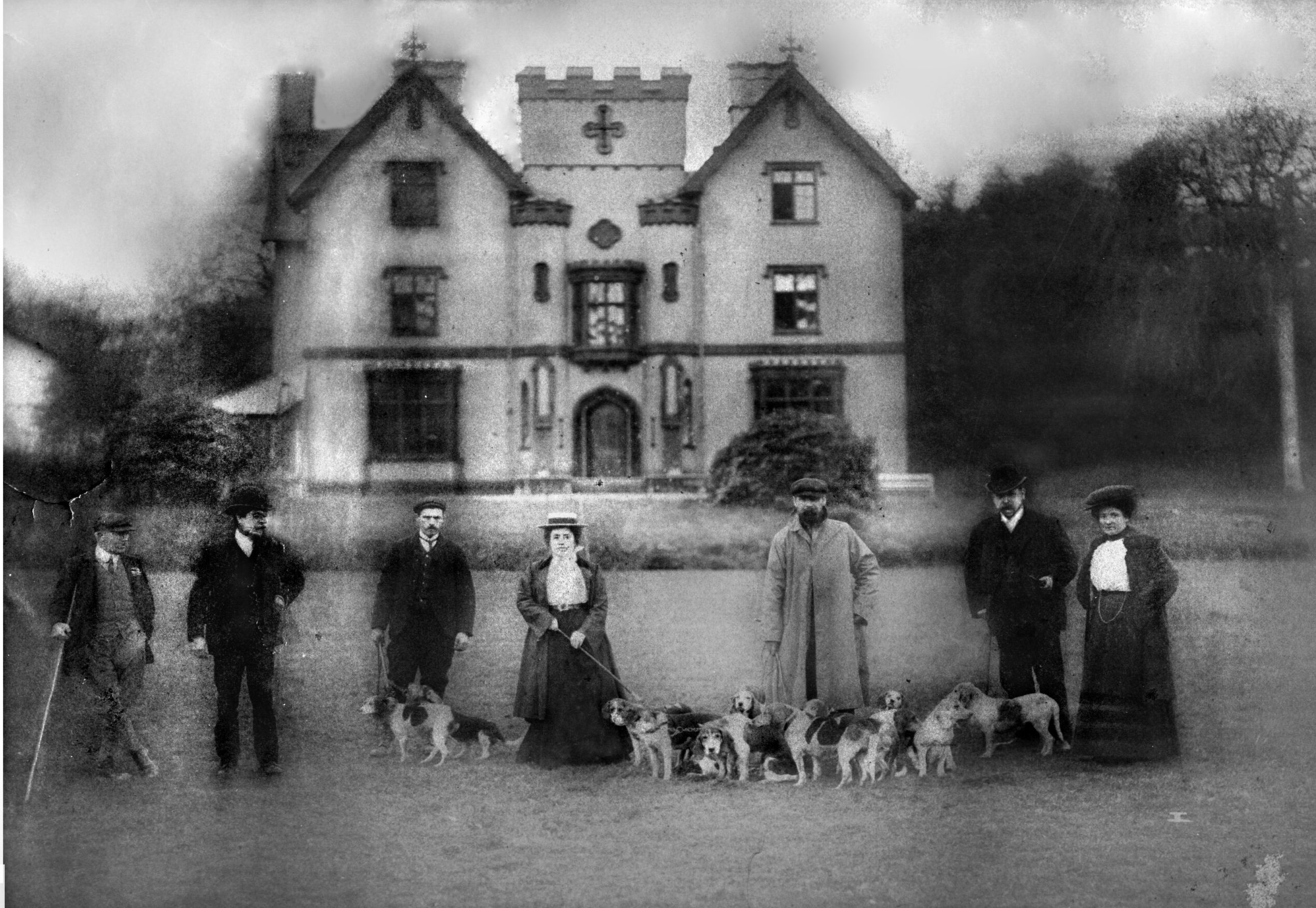
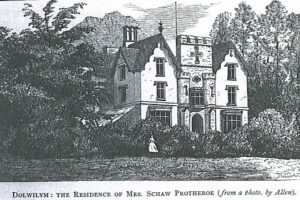
Little is known of the original mansion, which was totally demolished in 1841. In the years 1842-1845 a new mansion was built on the site for £3,861 which included the cost of the grounds, gardens etc. The mansion itself costing no more than £2,500. In about 1908 this mansion was destroyed by fire, a new mansion was rebuilt shortly afterwards, but was not lived in by the family who occupied the nearby house of Glyntaf.
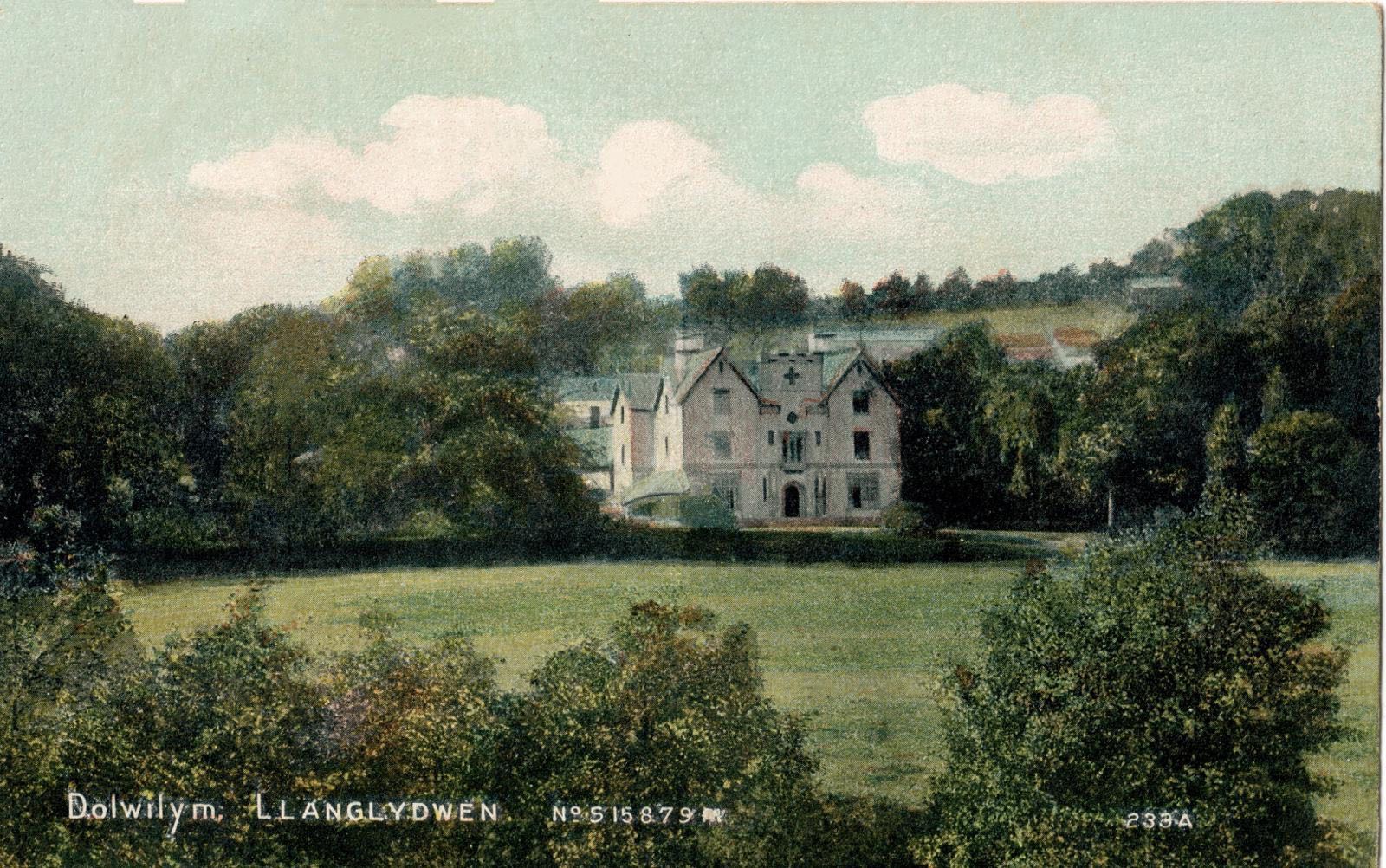
It was later used for German prisoners of war during the First World War but deteriorated afterwards.
The Protheroe family hit hard times and Mrs Fenner-Clayton, wife of the late J.G. Protheroe Beynon, sold it in the 60’s, after allowing a local builder to strip various materials from the main building in 1965.
Ref:
Major Francis Jones ‘Historic Carmarthenshire Homes and Their Families’
Herbert Millingchamp Vaughan ‘South Wales Squires’
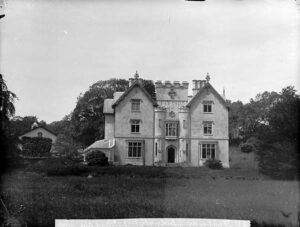
Then came the Hippies!
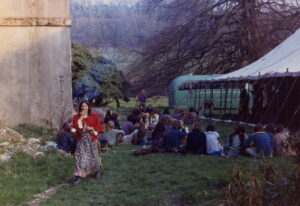
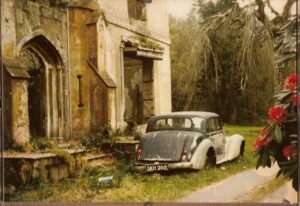
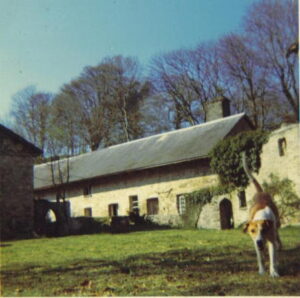
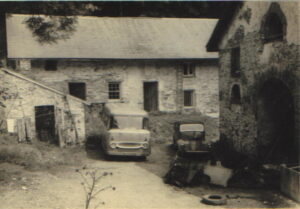
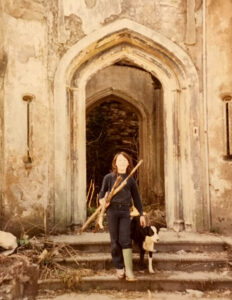
In 1967, Giles Chaplin moved in, and finally managed to purchase the building and estate, following a protracted negotiation, in 1971. When he moved in the mansion was just a shell but many of the outbuildings survived, including; the servants quarters, the pig sty, the coach house as well as others whose original use is unknown. Many of these have been renovated over the years.
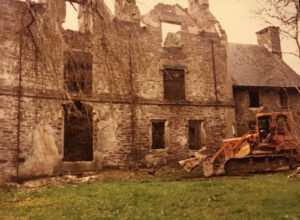
The mansion house was finally demolished in 1986, as it was deemed unsafe and beyond repair, leaving just the mansion kitchen wing standing (now converted into the Cuckoo House) and the cellar (now dug out to create a swimming pool area).
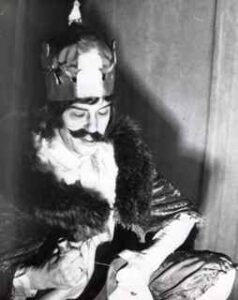
Dolwilym was a social hub in the late 60’s and 70’s with regular gigs in ‘The Shed’ (developed from the cow shed) as well as regular theatre performances by the ‘Dolwilym Theatre Company’. ‘Dolwilym Experimental Sound Studios’ (now Mwnci Studios built from the remains of one of the outbuildings) was also established in the early 70’s.
Giles Chaplin established Dyfed Antiques in 1967, which he ran from Dolwilym for a number of years before he and his then partner, Pam, expanded the business to the local town of Haverfordwest in Wesleyan Chapel. This thrived for many years, then in 2008 Giles downsized the business and sold the chapel in Haverfordwest, to once again buy and sell antiques from Dolwilym. In 2020 Giles sadly died and Dolwilym was passed on to his children.
Aerial view
How it looked in the 80’s